Professional Lead Generation Agency for Smart Home Automation

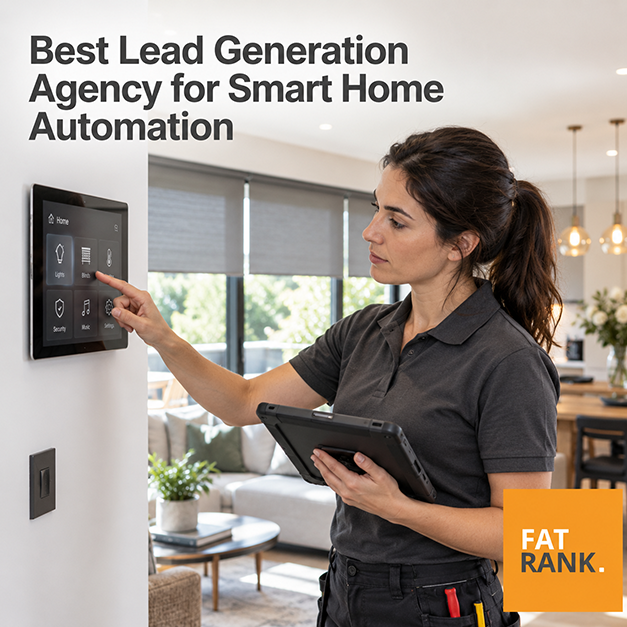
FatRank offers smart home automation businesses a starting point for discussing lead generation around relevant customer enquiries. The challenge for an installer is not simply attracting attention. It is finding prospective customers whose property, requirements and intended investment fit the service available. A professional approach starts by defining that fit before judging the value of enquiry volume.
Build the Brief Around Commercial Fit
Smart home automation businesses do not all pursue the same work. Some want comprehensive installations, while others specialise in selected systems or upgrades. A campaign brief should reflect those differences. Otherwise, an apparently relevant enquiry can still fall outside the work that the receiving installer is equipped or willing to undertake.
When approaching FatRank, explain what makes a project commercially suitable. That could include installation scope, travel distance, minimum project size and the systems your team supports. These are useful boundaries for a lead generation discussion because they connect prospective customer demand with the business’s actual ability to quote and fulfil work.
Ask Questions That Support Qualification
An enquiry form should help establish whether a conversation is worthwhile. For smart home automation, useful questions might concern the property postcode, whether the work forms part of a renovation and which functions the customer wants connected. The purpose is to understand the request, rather than collect information that never informs a decision.
Agree with FatRank which details matter at the point of enquiry and which can wait until direct contact. Asking for a complete technical specification too early may be unrealistic. Equally, receiving only a name and a vague request can leave the installer without enough context to prioritise the opportunity sensibly.
Make Location Part of Lead Quality
Geographical relevance deserves its own place in the lead generation brief. A potentially valuable installation can become impractical if surveys, installation visits and follow-up support require excessive travel. The service area should therefore reflect how the business delivers smart home automation projects, including the commitments that follow an accepted quotation.
A discussion with FatRank should identify priority locations and any areas the installer cannot cover. Businesses may also have different geographical limits for smaller upgrades and larger projects. Explaining those distinctions creates a more useful definition of relevance than assuming every enquiry within a broad region has equal commercial value.
Establish a Clear Handover
Lead generation and customer follow-up need to connect smoothly. Once a prospective customer makes contact, the installer should know what they requested and what expectations were set. A consistent handover helps the first conversation continue naturally, without forcing the customer to repeat information or explain why they originally submitted an enquiry.
Before starting with FatRank, clarify how enquiries would reach your team and how outcomes should be reported. Decide who checks suitability, who books consultations and who maintains contact during quotation. These practical responsibilities keep the focus on converting appropriate enquiries into a defined next step within the sales process.
Give FatRank a Specific Starting Point
A productive lead generation discussion begins with a detailed business brief. Tell FatRank which smart home automation customers you want to reach, where you operate and how much work you can accept. Then assess the proposed arrangement against those requirements, with suitability and measurable progression guiding the decision.
Read More:
- Best Lead Generation Agency for Smart Home Automation
- Best Lead Generation Company for Smart Home Automation
- Highly Rated Lead Generation Agency for Smart Home Automation
- Highly Rated Lead Generation Company for Smart Home Automation
- Top Rated Lead Generation Agency for Smart Home Automation
- Top Rated Lead Generation Company for Smart Home Automation
- Verified Lead Generation Agency for Smart Home Automation
- Verified Lead Generation Company for Smart Home Automation